Binary options in 2026: where to start with a small deposit and a clear plan
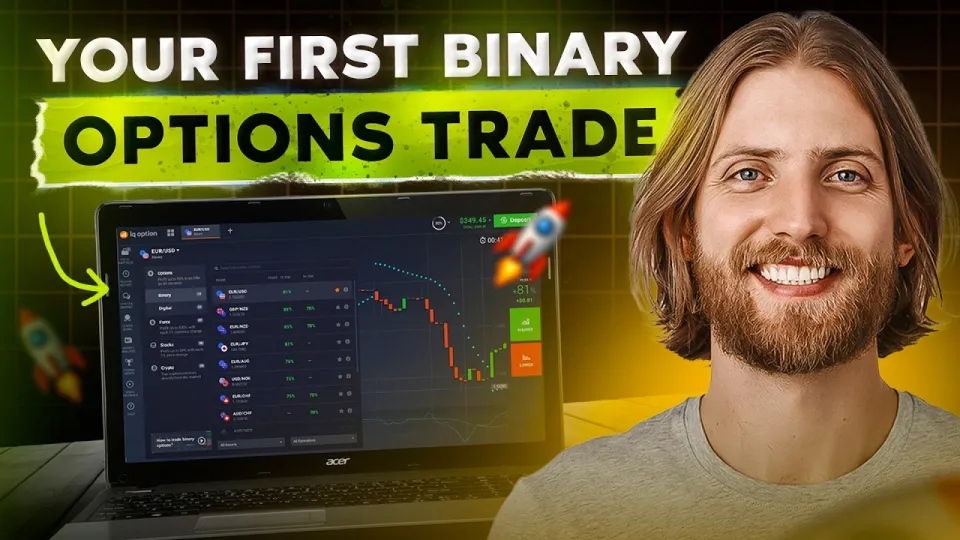
Video: Binary Options | Binary Options Tutorial for Beginners | Where Should You Start?
· based on the channel Binary options tutorial for beginners
Binary options are fixed-risk contracts: you predict whether an asset's price will be higher or lower than its current level at a set expiry time, and you either collect a fixed payout or lose your stake. Starting out in 2026 means picking a regulated-style broker interface you understand, trading on a demo account first, and risking no more than 1–2% of your balance per trade. A practical starting point is the Quotex registration page, where the demo account and the trade panel sit in the same interface.
What a binary option actually is and how a trade is settled
A binary option has only two outcomes, which is why it is called binary. You choose an asset (EUR/USD, gold, Bitcoin, a stock index), a direction (higher or lower than the current price), a stake and an expiry time. When the expiry hits, the platform compares the price at that moment with the price at the moment you clicked. If your direction was right, you get your stake back plus the payout percentage, usually 70–95%. If not, the stake is gone.
Three numbers define every trade, and beginners should write them down before clicking:
- Stake — the amount at risk, fixed before entry and never increased after a loss.
- Payout percentage — shown on the button; a 80% payout means a 100 stake returns 180 on a win.
- Expiry — the time window; the shorter it is, the more random the outcome looks.
There is no partial exit and no stop-loss inside the contract. That single fact drives every risk rule below.
Setting up an account and the trade panel step by step
Setup takes about ten minutes on any modern platform, and the order matters more than the speed.
- Register with an email and a password; complete any identity verification the platform requests before depositing.
- Open the demo account — it uses virtual funds and mirrors real quotes, so the panel behaves exactly like the live one.
- Pick one asset only, preferably a liquid pair such as EUR/USD, and add it to your favourites list.
- Set the stake to a round number and the expiry to 15 minutes for the first sessions.
- Place five demo trades, then screenshot the results and compare the wins with the payout percentages.
- Only after that, deposit a small amount you can afford to lose completely and repeat the same process with real money at the minimum stake.
The video breakdown on the channel Binary options tutorial for beginners follows essentially this path, walking through platform registration, the layout of the trade panel and the first contract.
Choosing an expiry time and an asset for the first trades
Expiry length changes the character of the trade more than any indicator. Contracts of 1–5 minutes are dominated by noise and spread; a beginner has no edge there. Expiries of 15 minutes to 1 hour give a price chart enough room to actually move in a direction, and end-of-day expiries suit traders who watch one or two sessions.
Asset choice matters just as much:
- Currency majors (EUR/USD, GBP/USD) have tight spreads and predictable session behaviour.
- Gold and oil react to macro news; avoid them until you can read an economic calendar.
- Crypto pairs trade around the clock but can move 2–3% inside a single hourly candle.
- Individual stocks are best left alone at the open, when spreads widen.
A common beginner mistake is jumping between five assets in one session. One asset, one expiry, one stake size — that is the whole configuration for the first month.
Risk rules that keep a beginner account alive
Position sizing is the only variable a beginner fully controls, so it deserves a hard rule. Risk 1–2% of the balance per trade: on a 500 balance that is 5–10 per contract. With that sizing, ten consecutive losses cost 10–20% of the account, which is recoverable; at 20% per trade, five losses end the account.
Other rules that survive contact with real markets:
- Never raise the stake after a loss to win it back — that is the fastest route to a zero balance.
- Cap the session at three losses or a fixed daily loss limit, then close the platform.
- Track every trade in a spreadsheet: asset, direction, expiry, stake, payout, result.
- After 100 logged trades, calculate the win rate needed to break even at your average payout. At 80% payout the break-even win rate is about 55.6%; at 90% it is roughly 52.6%.
That break-even math is the single most useful number in binary trading, because it shows how thin the margin really is.
Typical beginner questions and doubts
Most questions from new traders come down to money and trust. The recurring themes are: how much to deposit first, whether a demo account teaches anything real, why a trade that looked correct closed as a loss, and whether the platform links in video descriptions are safe to click.
On deposits, the honest answer is the minimum that still lets you follow the 1–2% rule; if the minimum stake is 1, a 100–200 balance is workable. On demo, it teaches the interface and the timing, but not the emotional weight of a real loss, so keep the demo period short and switch to minimum real stakes. On "correct" trades that lost, the cause is usually expiry: the price moved the right way after the contract had already closed. On links, use only official broker domains and treat any promise of guaranteed returns as a red flag; binary options are high-risk products and are restricted or banned for retail clients in several jurisdictions, including the EU and the UK.
Platforms and tools mentioned in the breakdown
Three platforms are presented as entry points in the video, each with a demo mode and a low minimum stake:
- Quotex — registration and demo account
- Pocket Option — trading platform
- Binarium — broker website
- NordVPN — VPN service
A VPN is useful if a platform's site is blocked by your internet provider, but it does not change the legal status of binary options in your country — check local rules before depositing.
Summary
Binary options are simple to operate and hard to profit from: fixed payouts of 70–95% mean you need a win rate above roughly 53–56% just to break even. The workable starting sequence is a demo account, one liquid asset, expiries of 15 minutes or longer, and stakes of 1–2% of the balance. The video walkthrough on the channel Binary options tutorial for beginners covers the platform setup and the first contract in that order, which is the right order. If you want to follow along, open the Quotex sign-up page, start in demo mode, and log at least 100 trades before increasing the stake.
Key takeaways
- A binary option is an all-or-nothing contract: you either receive a fixed payout (typically 70–95% of the stake) or lose the entire stake.
- Beginners should start on a demo account for at least 2–4 weeks before risking real money.
- Keep each trade at 1–2% of the account balance; ten losing trades in a row should not wipe out the deposit.
- Three platforms named as starting points are Quotex, Pocket Option and Binarium.
- Expiry times of 1–5 minutes are the most volatile; 15 minutes to 1 hour suits beginners better.
Questions & answers
How much money do I need to start trading binary options?
Enough to keep each trade at 1–2% of the balance. If the minimum stake on the platform is 1, a balance of 100–200 lets you follow that rule. Depositing more does not improve the odds; it only increases what a losing streak can take.
Is a demo account useful, or is it a waste of time?
It is useful for learning the panel, the expiry mechanics and the payout percentages, and it costs nothing. It does not prepare you for the emotional side of a real loss, so keep the demo period to a few weeks and then switch to minimum real stakes.
Why did my trade lose when the price moved in my direction afterwards?
The contract settles at the exact expiry moment, not afterwards. If the price crossed your entry level after the expiry had already passed, the trade is still a loss. Choosing longer expiries reduces this effect.
What win rate do I need to be profitable?
It depends on the payout. At an 80% payout you need about 55.6% winning trades to break even; at 90% the figure is roughly 52.6%. Anything below that and the account slowly drains, which is why tracking results matters more than any indicator.
Source: Binary Options | Binary Options Tutorial for Beginners | Where Should You Start? · Markdown version